
Buyers, lenders and partners look at how strong and how steady your earnings are, and how much depends on you. Learn the terms in plain language, try a quick estimate, and request a detailed review when you want a closer look.
Your first consultation is free, by phone or Zoom. Businesses of all sizes are welcome.

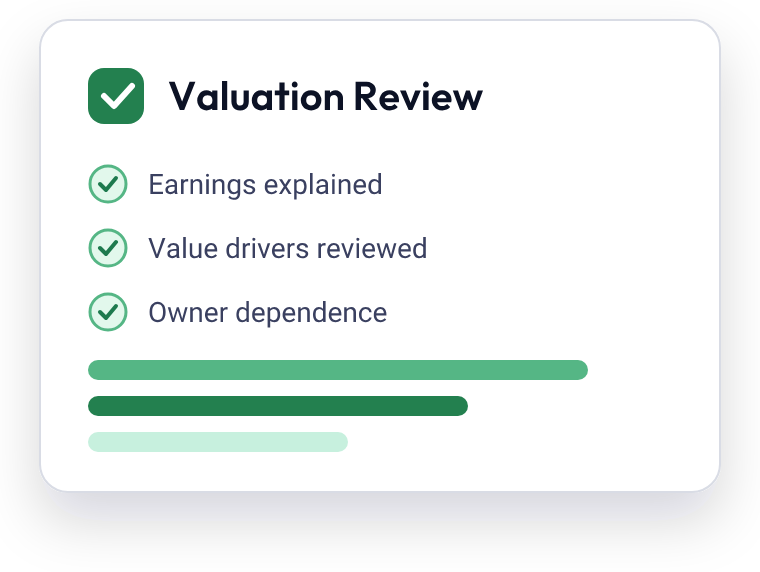
Valuation questions come up for established businesses of all sizes, and not only when a sale is on the table.
Not sure whether this fits? Book the free consultation and we will tell you plainly.

Most owners can name their sales. Fewer can say what the business is worth, or why. Three things usually get in the way.
You may have heard a figure, but not what drives it or what would move it.
Financial statements show profit, but not always the normal, repeatable earnings a buyer would look at.
If the business depends heavily on you, a buyer, lender or successor may see more risk and value it lower.
Short definitions to read before you try the estimator. These are general explanations, not advice for your situation.
Earnings before interest, taxes, depreciation and amortization. It is a way to look at operating earnings that makes businesses with different debt, tax and equipment situations easier to compare.
EBITDA after removing or correcting items that are one-time, unusual or specific to the current owner, such as a one-off legal cost or personal expenses paid by the business. Adjustments need records to support them.
The earnings available to one owner-operator. It usually starts from earnings and adds back the owner's pay and benefits, along with interest, depreciation, amortization and one-time items. It is often used for smaller owner-run businesses.
A number applied to earnings to estimate value. Multiples vary with industry, size, growth and risk. An SDE multiple belongs with SDE, and an EBITDA multiple belongs with EBITDA. Do not mix them. Example only, not a benchmark: earnings of 200,000 times a multiple of 2 gives 400,000.
Enterprise value is the value of the operating business regardless of how it is financed. Equity value is what is left for owners after subtracting debt and adding excess cash. In real deals, working capital, taxes and terms also matter.
Enterprise value = earnings × multiple, for a low and a high multiple. Simplified equity value = enterprise value − total debt + excess cash. It is a rough starting point, not an appraisal.
Systems come first, because steadier operations make earnings easier to trust. Value is then built from those earnings: earnings times a multiple gives enterprise value, and adjusting for debt and cash gives a simplified equity value.
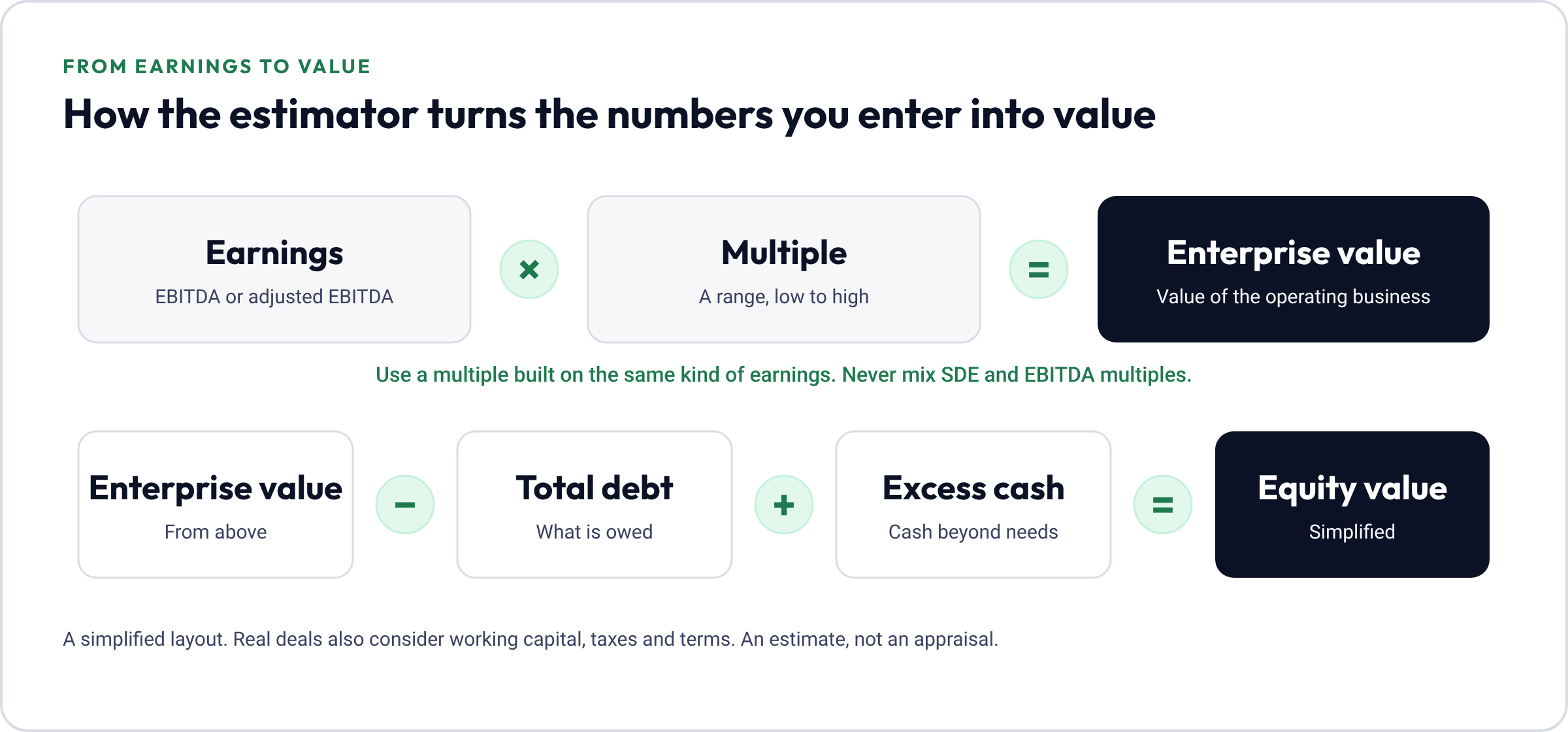
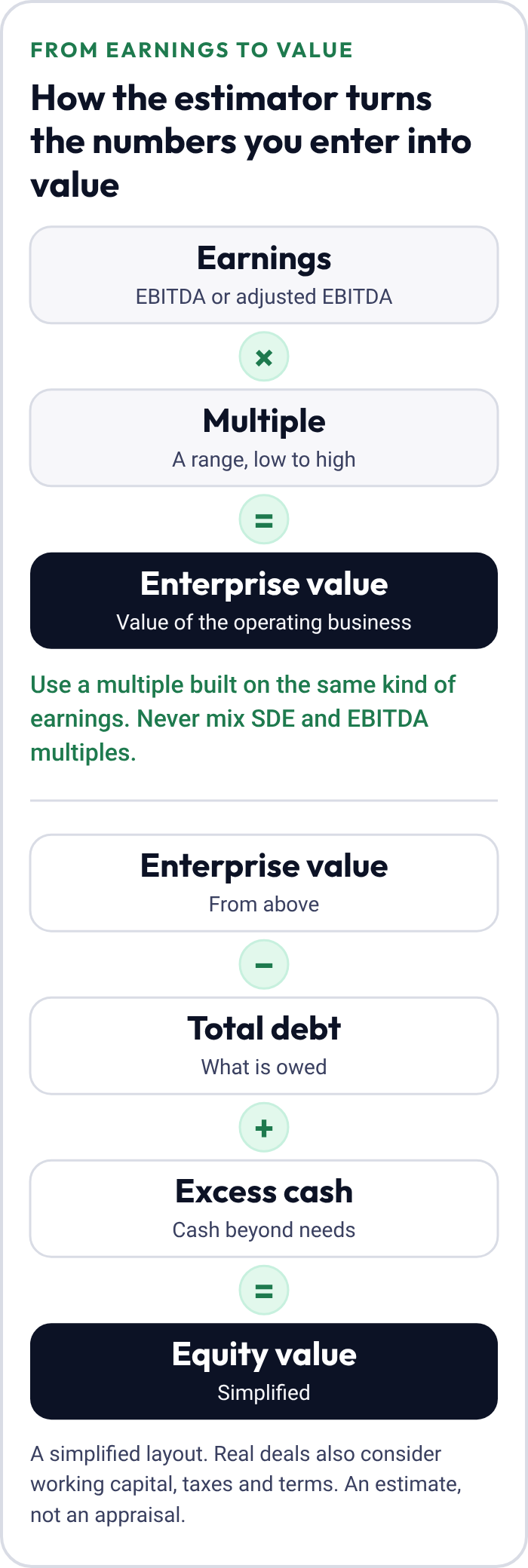
The estimator below follows exactly this layout. It multiplies the numbers you enter and shows the result. It is an estimate, not an appraisal.
Enter your earnings and the low and high multiples you want to test. Results appear as you type, with no sign-up. Nothing you enter is sent to us.
Estimate only, not an appraisal. This tool does simple arithmetic on the numbers you enter. It is not a valuation, appraisal, fairness opinion or advice, and it does not predict what a business would sell for. Nothing you type is sent anywhere; the math runs in your browser.
A multiple reflects how risky and how transferable the earnings look. These are the kinds of factors a buyer or lender tends to weigh.
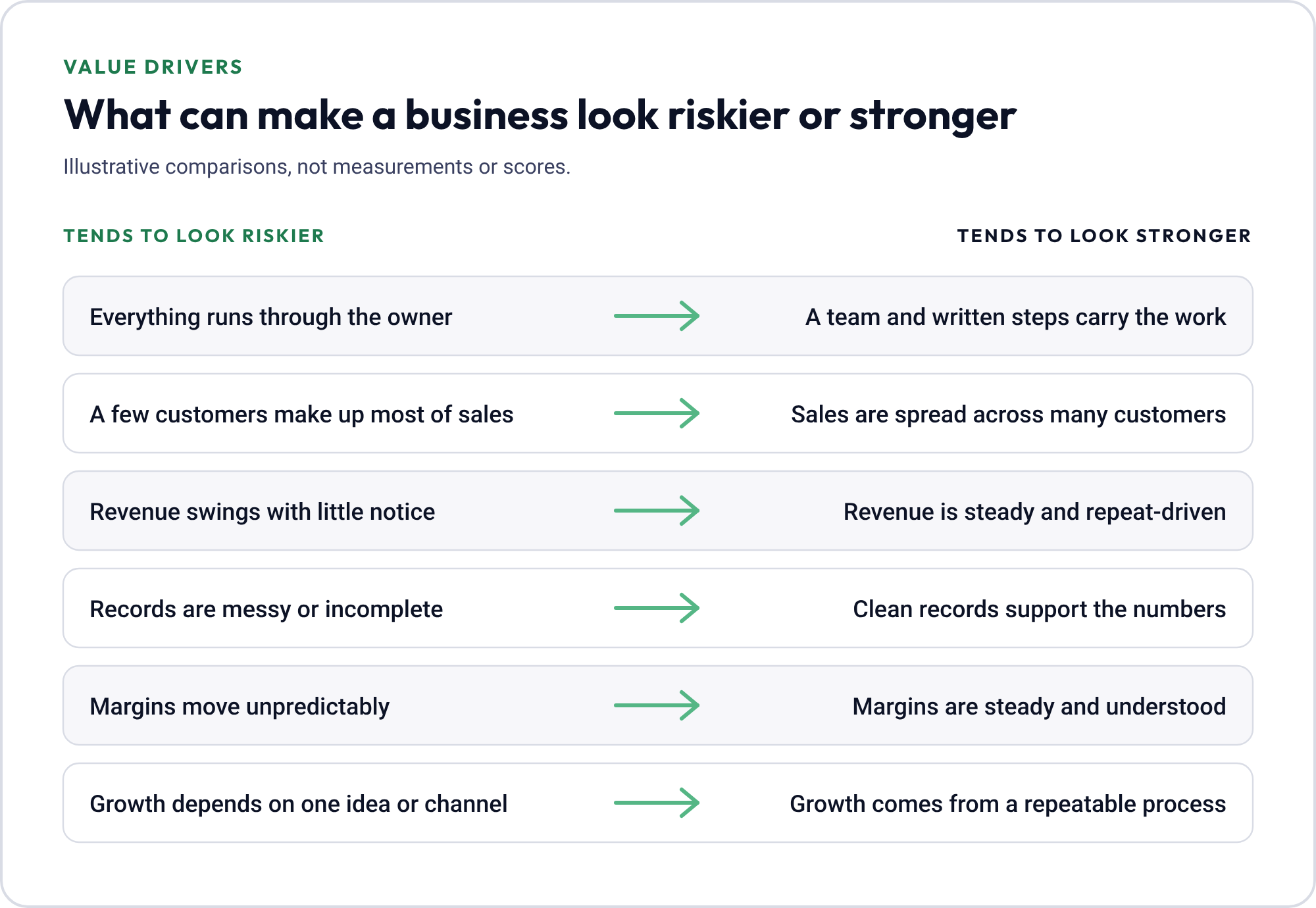
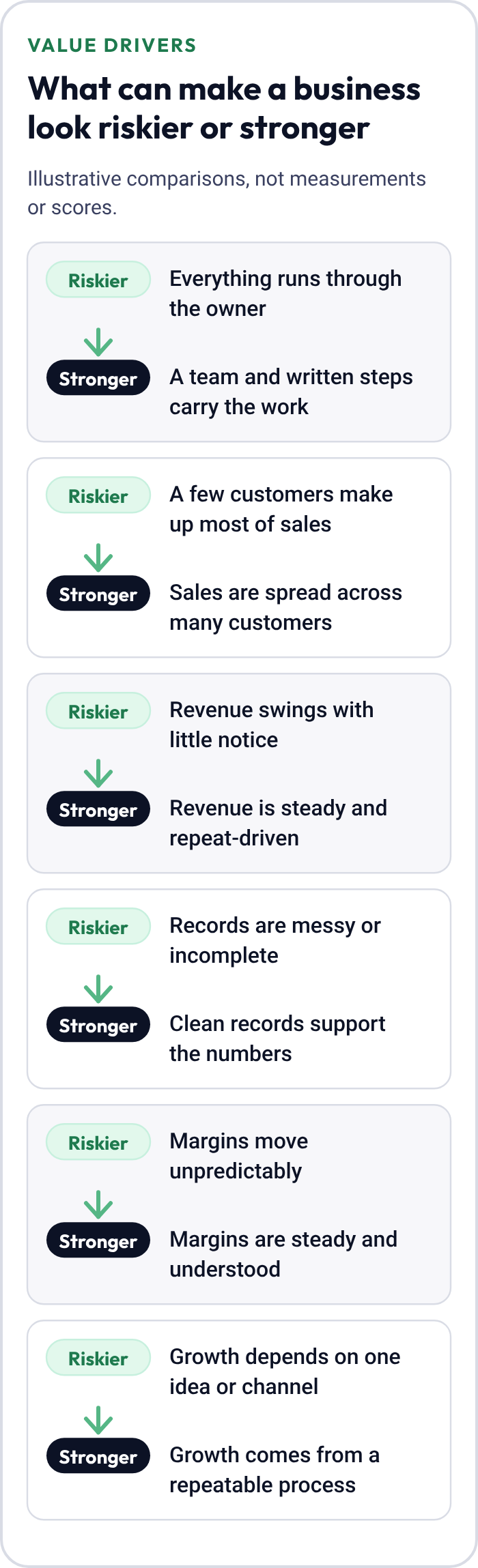
These are general patterns, not a scoring system. How much each factor matters varies by business, industry and buyer.
When you want more than a rough estimate, we can review your earnings, the adjustments behind them and the factors that shape value, then give you a written review with recommendations.
This is a consulting review, not an appraisal. We cannot promise a particular value or sale price.
Scaled to your business and the question you are trying to answer.
How EBITDA is built from the financial information you share, and which earnings measure suits your business.
Items that may be added back or normalized, and what records would be needed to support them.
Which measure is more appropriate for a business like yours, so the right kind of multiple is used.
A plain-language discussion of what affects multiples and which questions to ask when someone quotes one.
Owner dependence, customer concentration, steadiness of revenue and quality of records, and how they may affect how the business looks to a buyer or lender.
What to strengthen first, in order, so the business is easier to understand, run and value.
We deliver the plan. Carrying it out is up to you and your team. We do not offer implementation support at this time.
The OOTB Path is the same four steps in every engagement: from the first conversation to a written review. The depth of each step depends on your goals.
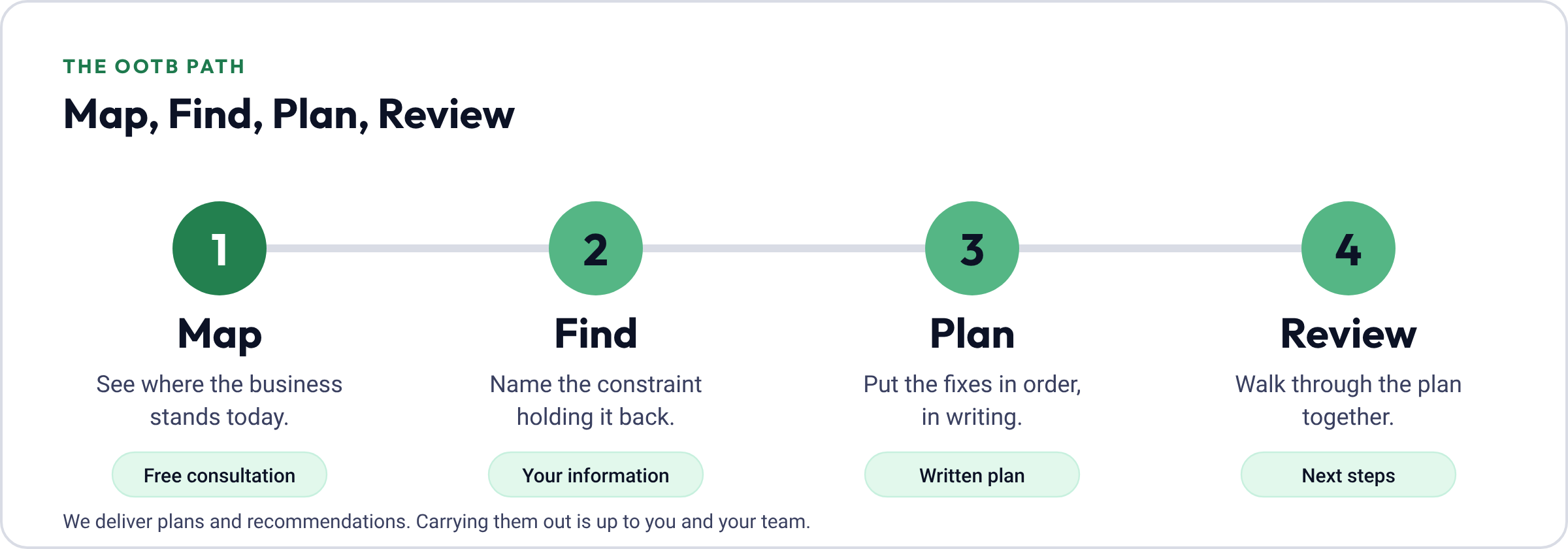
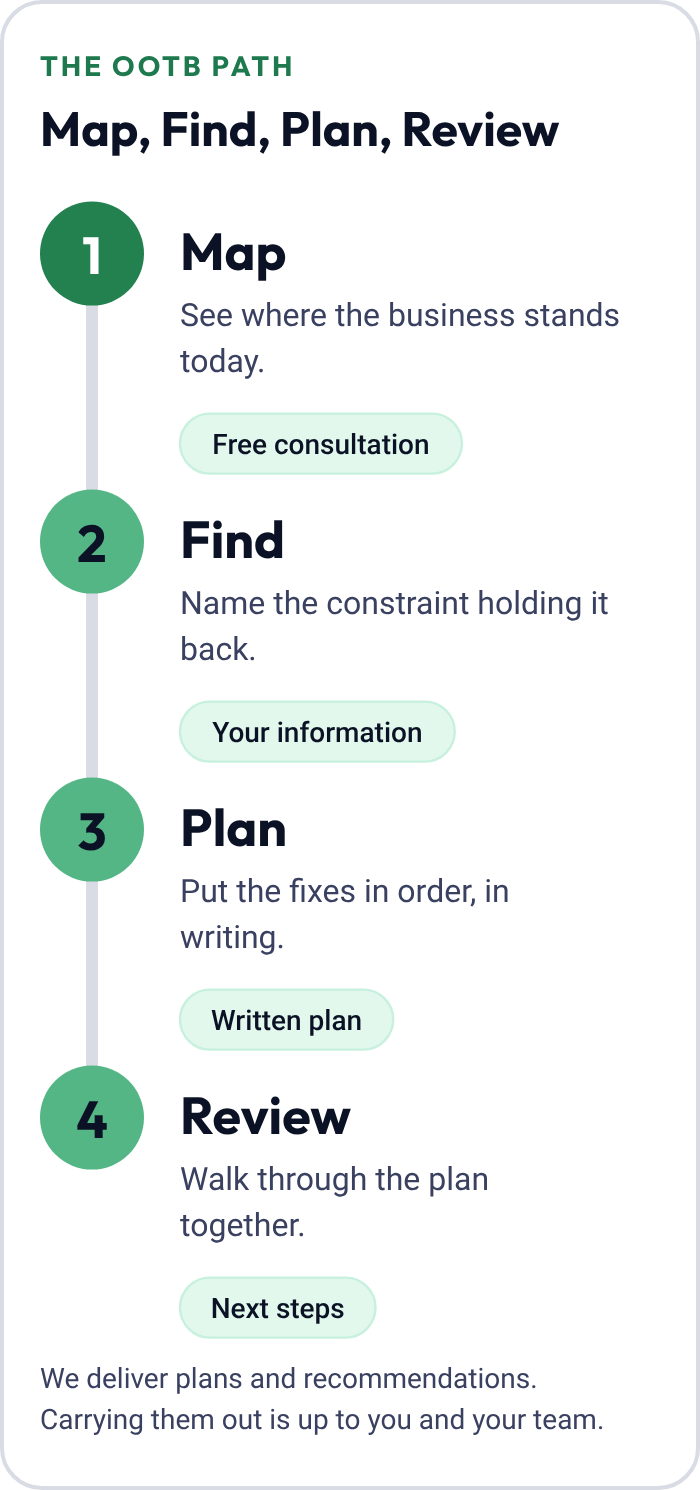
We talk by phone or Zoom about your goals, then map how your earnings are built from the financial information you share.
We find the adjustments, risks, owner dependence and value drivers that matter most for your business.
We write the review: an illustrative range with its assumptions, and priorities for strengthening value.
We walk you through the review so the numbers and next steps are clear.
A document that explains the numbers in plain language and puts improvement priorities in order.
This is a consulting review, not an appraisal, fairness opinion or tax, legal or accounting advice. We cannot guarantee a particular value or sale price. We deliver the plan. Carrying it out is up to you and your team. We do not offer implementation support at this time.

Do not see your question? Ask us during your free consultation.
Clearer systems tend to make earnings steadier and less dependent on one person. Buyers and lenders usually read that as lower risk, which can support a higher multiple. It is a tendency, not a guarantee.
EBITDA is earnings before interest, taxes, depreciation and amortization. Adjusted EBITDA removes or corrects one-time or owner-specific items to show normal earnings. SDE, or seller’s discretionary earnings, is often used for smaller owner-operated businesses and adds back the owner’s pay and benefits.
Be careful. Multiples vary by industry, size, growth and risk, and they only make sense next to the type of earnings they were built on. Never apply an SDE multiple to EBITDA or the reverse.
Enterprise value is the value of the operating business. Equity value is what is left for the owners after debt is subtracted and excess cash is added. The estimator shows a simplified version of that step.
No. It multiplies the numbers you enter and shows the result. It is not an appraisal and it is not a promise of what a business will sell for.
A multiple of zero or negative earnings does not give a meaningful number. A business with no current earnings can still have value, but judging that takes a different kind of analysis.
No. The estimator runs in your browser and the numbers you type are not submitted to us.
A written review of your earnings, adjustments and value drivers, with an illustrative range and recommendations. It is a consulting review, not an appraisal, and we do not offer implementation support at this time.
Tell us what you want to understand about your business. We will help you work out what to look at first.
Your first consultation is free, by phone or Zoom. Businesses of all sizes are welcome.